
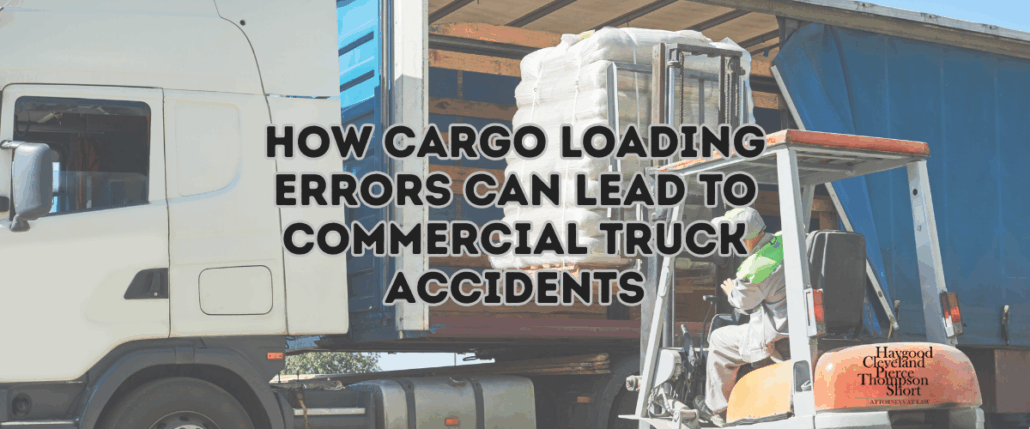
How Cargo Loading Errors Can Lead to Commercial Truck Accidents
Semi-truck accidents are a serious concern on Alabama’s roads, often leading to severe injuries and fatalities. While many factors can contribute to these incidents, one often overlooked yet significant cause is improper cargo loading. When cargo is not correctly secured or distributed, it can shift during transit, affecting the truck’s stability and control, and potentially leading to catastrophic accidents.
The Dangers of Improperly Loaded Cargo
The sheer size and weight of commercial trucks mean that any issue affecting their stability can have devastating consequences. Improperly loaded cargo can transform a seemingly routine journey into a hazardous situation.
How Can Cargo Loading Go Wrong?
- Uneven Weight Distribution: When the weight of the freight is not evenly distributed across the truck’s axles, it can cause the vehicle to become unbalanced. This can make the truck difficult to steer, especially when navigating turns or braking.
- Overloaded Trucks: Exceeding the truck’s maximum weight capacity puts excessive strain on its tires, brakes, and suspension system. This increases stopping distances and the risk of tire blowouts, both of which can lead to severe accidents.
- Insecure Cargo: If freight is not properly secured with straps, chains, or other restraints, it can shift dramatically during sudden stops, turns, or impacts. This shift can cause the truck to overturn, or the cargo itself can spill onto the roadway, creating additional hazards for other drivers.
- Improperly Packaged Goods: Sometimes the issue isn’t just how the cargo is loaded, but how it’s packaged. Fragile items or liquids that aren’t contained correctly can leak or break, affecting the truck’s stability or creating slippery conditions on the road.
Common Types of Accidents Caused by Cargo Loading Errors
Cargo loading failures can manifest in several dangerous ways on Alabama’s highways.
- Rollover Accidents: These are among the most common and severe types of incidents stemming from unstable loads. If a truck’s center of gravity shifts too high due to top-heavy freight or if cargo moves to one side, the truck can easily roll over, particularly on curves or during evasive maneuvers.
- Jackknife Accidents: This occurs when the trailer swings out to a 90-degree angle with the cab, resembling a folding pocket knife. Improper weight distribution, especially in slippery conditions or during hard braking, can make a truck more susceptible to jackknifing.
- Brake Failure: Overloaded trucks put immense strain on their braking systems. This can lead to overheated brakes, reduced braking power, or even complete brake failure, making it impossible for the driver to stop in time to avoid a collision.
- Tire Blowouts: Exceeding weight limits significantly increases the risk of tire blowouts. A sudden tire blowout, particularly on a steering axle, can cause a driver to lose control of the truck, leading to a multi-vehicle pileup.
- Lost Load Accidents: If cargo is not properly secured, it can detach from the truck and spill onto the road. This creates sudden, unexpected obstacles for other drivers, leading to swerving, sudden braking, and subsequent collisions.
- Undercarriage Damage: Shifting cargo can damage the truck’s frame, axles, or suspension, leading to mechanical failures that compromise the truck’s safety and control.
Who is Responsible for Safe Cargo Loading?
Determining liability in truck accidents involving cargo loading errors can be complex, as multiple parties may share responsibility.
- The Shipper: The entity that prepares the goods for transport has a responsibility to package them appropriately and provide accurate information about their weight and characteristics.
- The Loader/Cargo Company: The company or individuals physically loading the cargo onto the truck must ensure it is distributed correctly and securely fastened according to safety regulations.
- The Trucking Company: The carrier company is ultimately responsible for ensuring their trucks are roadworthy and that cargo is loaded and secured safely. They must also train their drivers and loading personnel on proper procedures.
- The Truck Driver: While often not solely responsible for loading, drivers have a duty to inspect their loads before and during transit. They should check for proper weight distribution, securement, and overall stability. If they observe an unsafe load, they are generally obligated to refuse to transport it until it is rectified.
Legal Responsibilities and Requirements for Cargo Securement
Federal and state regulations govern how cargo must be loaded and secured to prevent accidents.
Federal Motor Carrier Safety Administration (FMCSA) Regulations
The FMCSA sets forth detailed rules for cargo securement for commercial motor vehicles operating in interstate commerce. These regulations cover:
- General Cargo Securement Requirements: Stipulate that cargo must be properly distributed and secured to prevent shifting, falling, or rolling.
- Specific Securement Devices: Outline the requirements for various tie-downs, ropes, chains, and other securement equipment, including their strength and usage.
- Performance Requirements: Mandate that cargo systems must be capable of withstanding certain forces (e.g., deceleration, acceleration, and lateral movement) without the cargo shifting.
- Commodity-Specific Rules: Provide additional guidelines for securing certain types of cargo, such as logs, metal coils, vehicles, and heavy equipment.
Alabama State Laws
While federal regulations are extensive, Alabama also has specific laws regarding negligence and liability in accidents, which can apply to cargo-related incidents. In Alabama, the legal standard for determining fault in personal injury cases is pure contributory negligence. This means that if an injured party is found to have contributed any degree of fault to an accident, they may be barred from recovering damages. This rule makes a thorough investigation into the cause of the accident, including cargo loading issues, even more important.
Investigating Cargo-Related Truck Accidents
A comprehensive investigation is paramount in cases involving cargo loading errors. This often requires specialized knowledge and resources.
Key Evidence to Collect
- Bill of Lading and Shipping Documents: These documents provide information about the cargo, its weight, and the parties involved in its loading and transport.
- Loading Diagrams and Manifests: If available, these can show how the cargo was intended to be distributed and secured.
- Truck’s Black Box Data (ECM): The Electronic Control Module records critical data such as speed, braking, and sudden movements, which can indicate load shifts.
- Driver Logs and Hours of Service Records: These can shed light on driver fatigue, which might exacerbate issues caused by an unstable load.
- Accident Scene Photos and Videos: Visual evidence of skid marks, debris, cargo displacement, and truck damage can be invaluable.
- Witness Statements: Accounts from eyewitnesses, particularly those who observed the truck prior to the accident, can provide critical details about the cargo’s stability or the truck’s handling.
- Maintenance Records: These records can show if there were any pre-existing issues with the truck’s suspension, tires, or braking system that might have been exacerbated by improper loading.
- Expert Witness Testimony: Accident reconstructionists and cargo securement professionals can analyze the evidence and provide expert opinions on how cargo loading contributed to the accident.
The Role of an Accident Reconstructionist in Cargo Loading Cases
Accident reconstructionists are highly valued professionals in complex trucking accident cases, especially when cargo loading is a suspected factor.
- Analyzing Load Shift Dynamics: They can determine how a load shifted and calculate the forces involved, explaining how this affected the truck’s stability and the driver’s ability to maintain control.
- Evaluating Securement Systems: Reconstructionists can assess whether the tie-downs, straps, or other securement devices used were adequate for the cargo and if they were properly applied.
- Determining Weight Distribution: Using forensic techniques, they can estimate the weight distribution of the cargo at the time of the accident and compare it to safe loading standards.
- Simulating the Accident: With specialized software, they can recreate the accident sequence, demonstrating how a shifting or overloaded cargo contributed to the crash.
- Identifying Regulatory Violations: Their knowledge of FMCSA and state cargo securement regulations allows them to identify specific violations that may have led to the accident.
Preventing Cargo-Related Truck Accidents
Preventing these types of accidents requires diligence from all parties involved in the logistics chain.
- Proper Training: All personnel involved in loading and securing cargo, as well as truck drivers, should receive comprehensive training on proper techniques and safety regulations.
- Adherence to Regulations: Strict adherence to FMCSA and state cargo securement laws is not just a legal requirement but a safety imperative.
- Regular Inspections: Drivers should conduct thorough pre-trip and en-route inspections of their loads to ensure cargo remains secure. Trucking companies should implement robust maintenance schedules for their vehicles.
- Appropriate Equipment: Using the correct securement devices and ensuring they are in good working order is essential.
- Accurate Weighting: Cargo must be accurately weighed and distributed to avoid overloading and unbalanced loads.
Navigating the Legal Process After a Cargo-Related Truck Accident
If you or a loved one has been involved in a semi-truck accident potentially caused by cargo loading errors, navigating the legal landscape can be challenging.
What Steps Should You Take?
- Prioritize Medical Attention: Your health and well-being are paramount. Seek immediate medical attention for any injuries, even if they seem minor. Keep detailed records of all medical treatments and expenses.
- Document the Scene: If safely possible, take photos and videos of the accident scene, including the position of the vehicles, any cargo spilled or shifted, skid marks, and road conditions. Gather contact information from any witnesses.
- Do Not Admit Fault: Avoid making statements about fault at the scene or to insurance adjusters. Stick to the facts.
- Preserve Evidence: Do not allow the truck or its cargo to be moved or altered until a thorough investigation can be conducted.
- Consult a Knowledgeable Attorney: An attorney with experience in trucking accident cases can help you understand your rights, investigate the cause of the accident, identify all liable parties, and pursue a claim for compensation. They can also handle negotiations with insurance companies, which may try to minimize payouts.
Protect Your Rights After a Trucking Accident in Alabama
Cargo loading errors can lead to devastating commercial truck accidents, and pursuing a legal claim can be complex due to the multiple parties and intricate regulations involved. At Haygood, Cleveland, Pierce, Thompson & Short, LLP, we are dedicated to helping those affected by such incidents. Our legal team can provide support and guidance as you seek the compensation you deserve.
If you have questions or need assistance with a semi-truck accident claim in Alabama, contact us at 334-560-1936 for a consultation.




Leave a Reply
Want to join the discussion?Feel free to contribute!