
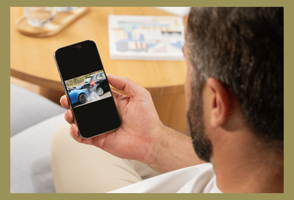
Why You Should Never Post About Your Accident on Social Media in Alabama
A driver gets rear-ended near the Interstate 85 interchange at Tiger Town in Opelika. She feels rattled but walks away. That night she posts a photo of her crushed bumper: “Somebody wasn’t watching where they were going. I’m okay, just sore.”
Eighteen months later, a defense attorney reads that caption out loud in a deposition. Not the photo. The caption. Two phrases in it are now doing more damage to her case than the collision did to her car.
That sequence plays out constantly across Lee County. Posting after a wreck feels natural. You want people to know you are alive, and you want to vent about the driver who hit you.
Can Insurance Adjusters Look at My Social Media After an Alabama Crash?
Yes. Adjusters and defense investigators routinely review publicly visible accounts after a crash, and no court order is needed to see what is already public. Once a claim becomes a lawsuit, private content becomes reachable through formal discovery under the Alabama Rules of Civil Procedure.
The review starts at intake, long before anyone files anything. Larger insurers assign it to special investigations units. Others hire outside firms that build claimant profiles. The work is not sophisticated: someone types your name into a search bar and starts capturing dated screenshots.
Every screenshot carries a date stamp. By the time a claim reaches negotiation, a carrier may hold a folder covering months you stopped thinking about, assembled without a single request sent to you.
How Can a Single Post Destroy an Alabama Injury Claim Completely?
Alabama follows pure contributory negligence, a rule only a handful of states still apply. An injured person who bears even a small share of responsibility for a crash can be barred from recovering anything at all, rather than having an award reduced in proportion to fault.
The rule turns on the injured person’s own conduct, not on how badly they were hurt. A catastrophically injured driver and a lightly bruised one face the same all-or-nothing question.
A defendant must prove three things. Under Serio v. Merrell, Inc., the defense requires a showing that the injured person knew of the danger, appreciated it, and failed to exercise reasonable care to avoid it.
Now picture a caption typed at eleven at night: “I was fiddling with my playlist and never saw him coming.” Knowledge of the risk. Appreciation of it. A choice made anyway. One sentence, signed by the claimant, and defense counsel in the Lee County Circuit Court needs only a printout.
Contributory negligence is not a defense to wantonness, which Alabama Code § 6-11-20 defines as conduct carried on with a reckless or conscious disregard of the rights or safety of others. That is a far harder showing about the other driver, not a way around a damaging post.
Are Private or Friends-Only Posts Protected from Discovery in Alabama?
No. Alabama recognizes no social media privilege. State discovery rules reach any matter that is not privileged, relevant to the subject matter of the case, and proportional to its needs. Adjusting an account’s privacy settings limits who can browse it, not what a court can order produced.
The word people fixate on is “private.” The word that decides the question is control. Rule 34 of the Alabama Rules of Civil Procedure reaches documents and electronically stored information, including photographs, images, and other data compilations stored in any medium, within a party’s possession, custody, or control. Your account lives on a company server, but you can download the whole archive in two minutes.
So the argument in a Lee County case is rarely about secrecy. It is about scope. Judges order production tied to a window of time and subject matter, not an entire digital life:
- Photographs and video, including stories that appear temporary
- Captions and comments discussing the crash, your treatment, or your limitations
- Check-ins, tagged locations, and event attendance
- Activity timestamps showing when you were online and from where
- Content others posted in which you appear or are tagged
- Direct messages referencing the collision or your injuries
Deleted material belongs on that list too; a court-ordered download often surfaces posts believed to be gone.
What Happens If I Delete My Accident Posts?
Deleting posts after a crash can be treated as spoliation of evidence. Alabama’s civil procedure rules address electronically stored information that should have been preserved in anticipation of litigation and is lost because a party failed to take reasonable steps to keep it, and courts may impose remedies.
Someone realizes a post looks bad, deletes it, and feels relieved. They have just made it worse.
Rule 37(g) of the Alabama Rules of Civil Procedure is the mechanism, and its trigger arrives earlier than people expect — often the first phone call from an adjuster, long before anyone mentions a lawsuit. What a court does about it turns on whether you simply lost the material or meant to.
Think about how that plays to a jury in Opelika. The defense no longer has to prove what the post said, only that you made it vanish. Three actions people confuse:
- Deactivating hides an account from view, though on some platforms it starts a deletion clock
- Deleting destroys posts or the account itself and is what creates exposure
- Archiving downloads a personal copy while everything remains in place
Archiving is the only one of the three that clearly protects you. Talk to your attorney before touching an account any other way.
Why Is Your Own Post the Easiest Evidence for the Defense to Use?
Because it faces almost no evidentiary obstacles. A statement offered against the party who made it is excluded from the definition of hearsay under Alabama’s evidence rules, and a post can be authenticated through distinctive characteristics such as the account name, profile photograph, and writing style.
Every other exhibit costs the defense something. A medical opinion requires a retained physician. Surveillance video requires an investigator on the stand. Your post costs a screenshot and a printer.
Alabama Rule of Evidence 801 and Rule 901 are the two provisions at work. From one printed page, defense counsel will typically build:
- A challenge to the date your symptoms actually began
- A challenge to the severity you described under oath
- A general credibility attack applied to everything else in the file
- A request to the carrier for lower settlement authority
That last item is the real cost. Once credibility is in play, a jury shown one inconsistency starts looking for others.
Which Kinds of Posts Cause the Most Damage in Alabama Injury Cases?
The most damaging posts are the ones that contradict something already written in a medical record. A photograph does not have to show strenuous activity to hurt a claim. It only has to conflict with a date, a stated limitation, or your own account of how the collision happened.
The same posts turn up again and again, written by people with genuine injuries who had no idea anyone was reading:
- An apology of any kind, which reads as an admission in print
- A reassurance post in week one: “Nothing broken, I’m fine”
- Tailgate photographs from an Auburn University home game
- Yard work or moving-day pictures from Beauregard or Smiths Station
- Vacation content posted months after the collision
- Any image involving alcohol near the crash date
- Complaints about the other driver or your adjuster
A defense attorney reads “I’m fine” as a dated declaration that you had no symptoms on day three. When a herniated disc turns up in week six, that post becomes the argument that something else caused it.
Can Photos Your Friends Post or Tag You In Be Used Against You?
Yes. Content created by friends, relatives, and coworkers is discoverable even though you did not write or upload it. Tagged photographs, group images, event pages, and comment threads can place you at a location or show activity that conflicts with the limitations described in your claim.
You can lock your own account down to nothing. You cannot lock down your sister’s.
Investigators know this and work outward. A claimant’s account goes quiet after a wreck; the accounts around them do not. A cousin uploads a gallery from a wedding in Valley. A coworker posts a team photo.
Untagging changes data on your own account without removing anything; the image still sits on the other person’s page with its original date. Asking them to delete it stacks a second problem on the first: induced destruction of evidence.
The conversation that works asks for silence going forward, not for anything to come down.
How Do Check-Ins, Geotags, and App Data Undercut an Injury Claim?
Location and activity data build a timeline without anyone posting a word. Connected applications publish timestamps, coordinates, and routines by default, and defense counsel assembles those points into a record used to contradict testimony about mobility, pain levels, and daily restrictions.
A phone embeds a timestamp and often coordinates before a photo reaches any account. A running app posts a completed route unasked. A payment app shows a transaction on Opelika Road, publicly, by default.
An account can look silent and still be broadcasting. Cross-posting is the reason: one app publishes to another automatically. Worth auditing after a crash:
- Fitness and running apps with public activity feeds
- Payment apps with public transaction histories
- Phone and watch health data, including step counts
- Location-sharing apps used by families
- Review accounts that publish a date and a place
- Automatic photo backups that attach location tags
None of this proves someone is not hurt. A person with a serious back injury can walk a mile on a good day and spend the next two flat.
What Should You Do with Your Social Media Accounts After an Alabama Accident?
Stop posting about the collision, your injuries, your treatment, and your activities. Leave existing content in place rather than deleting it. Tighten privacy settings going forward, decline unfamiliar connection requests, ask friends not to tag you, and tell your attorney about every post that already exists.
Write down what is already out there before you touch a setting.
Open each account and scroll back to the date of the wreck. Note what you posted, commented on, and were tagged in. You are making sure your own attorney is never surprised at a deposition.
The conversation with family is the step people skip. It is awkward to tell your mother she cannot post the picture from Sunday dinner. It is worse to explain a photo you have never seen, under oath.
If you have posts queued to publish automatically, raise it with your attorney before cancelling anything. Investigators do send connection requests, and they do not look like investigators.
How Long Do You Need to Stay Careful on Social Media?
Through the entire life of the claim. Alabama gives injured people two years to file a personal injury action, and a case filed near that deadline can stay active for years afterward. Caution has to extend through settlement negotiations, trial, and any appeal rather than a few quiet weeks.
That window comes from Alabama Code § 6-2-38(l), and it runs from the date of the collision, not the date a doctor names the injury. A claim filed in the 37th Judicial Circuit in month twenty-two does not resolve quickly:
- Investigation and treatment until the injured person reaches maximum medical improvement
- Filing of the complaint in the Lee County Circuit Court
- Written discovery, including the request for production that reaches social media
- Depositions of the parties and treating physicians
- An independent medical examination, if the carrier requests one
The more severe the injury, the longer that sequence runs, because a condition has to stabilize before anyone can put a number on it.
The late mistake is the expensive one. People hold the line for a year, clear mediation, and post a beach photograph exactly when a carrier is reassessing value.
Protect Your Alabama Injury Claim with Knowledgeable Legal Counsel
Insurance carriers maintain entire units devoted to finding reasons not to pay. In a state where a sliver of assigned fault can end a claim outright, the margin for an offhand post is thin.
At Haygood, Cleveland, Pierce, Thompson & Short, LLP, our attorneys represent injured people throughout Auburn, Opelika, Lee County, and East Alabama. We know how defense teams build a case from a claimant’s own accounts, and we counsel clients on protecting their claims from the first conversation.
Contact our office today by phone to schedule a free, confidential consultation and find out where your claim stands.
Frequently Asked Questions
Can I post a photo of my damaged vehicle after a crash in Alabama?
It is better not to. Vehicle photographs invite comparison between how a car looks and how a person says they feel, and moderate damage gets used to argue an injury could not be serious. Send those images to your attorney instead.
Should I deactivate my Facebook account after an accident?
Not without talking to your attorney first. Deactivation looks harmless, but on some platforms it starts a deletion countdown, and preservation obligations may already apply to your account. Stopping new posts accomplishes most of what deactivation does without the risk.
Can the insurance company subpoena Facebook directly for my account?
Usually not. Under 18 U.S.C. § 2702, providers are generally barred from divulging the contents of stored communications to private parties. Defense counsel works around that by requesting the material from you instead.
Does deleting a post actually remove it permanently?
Rarely. Platforms retain archived copies, screenshots may already exist on other devices, and anyone who saw the post can testify about it. Deletion removes a post from public view while leaving it recoverable.
Can social media affect a claim for pain and suffering?
Yes, sometimes more than it affects medical damages. Non-economic damages depend on how a jury understands the way an injury changed your daily life. Photographs of you smiling at social events give the defense material to argue little changed.
What should I do if I already posted about my accident?
Tell your attorney right away and leave the post where it is. Our firm handles injury claims on a contingency fee basis, so there is no cost to have that conversation early. A post disclosed at the outset can usually be addressed; one the defense uncovers at a deposition is far harder to manage.




Leave a Reply
Want to join the discussion?Feel free to contribute!